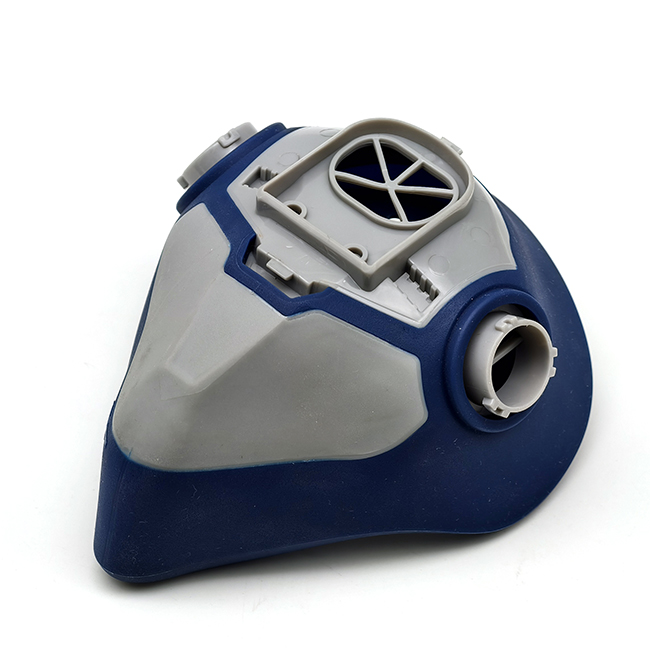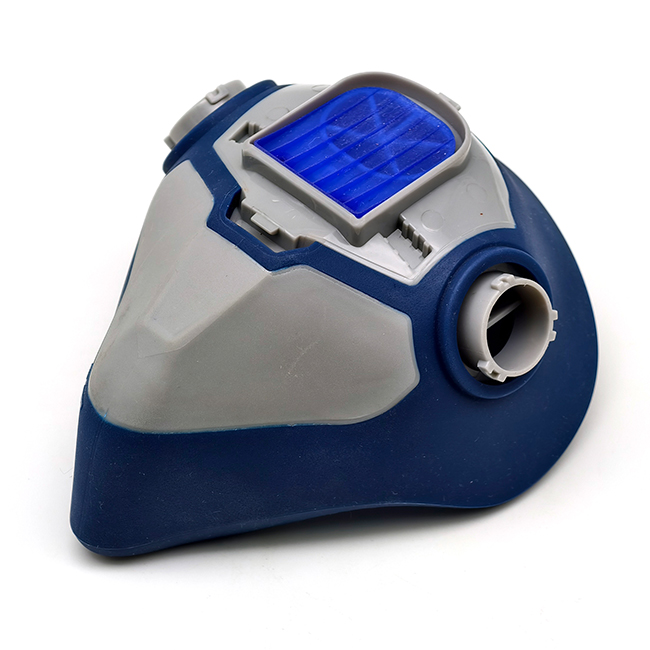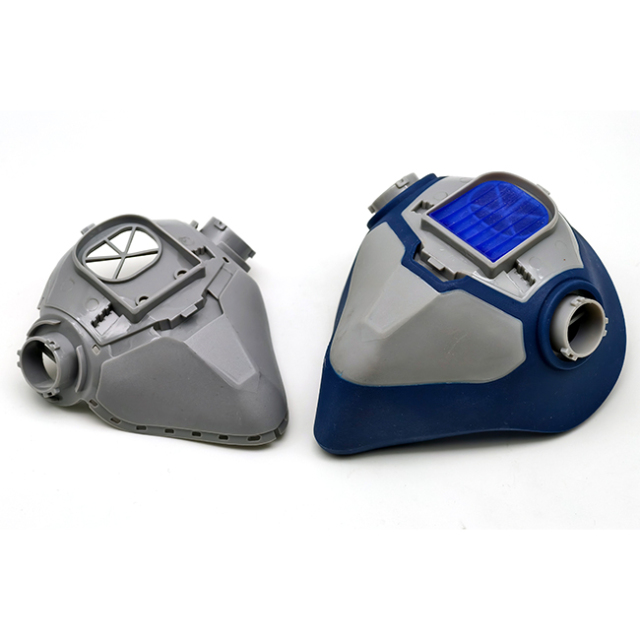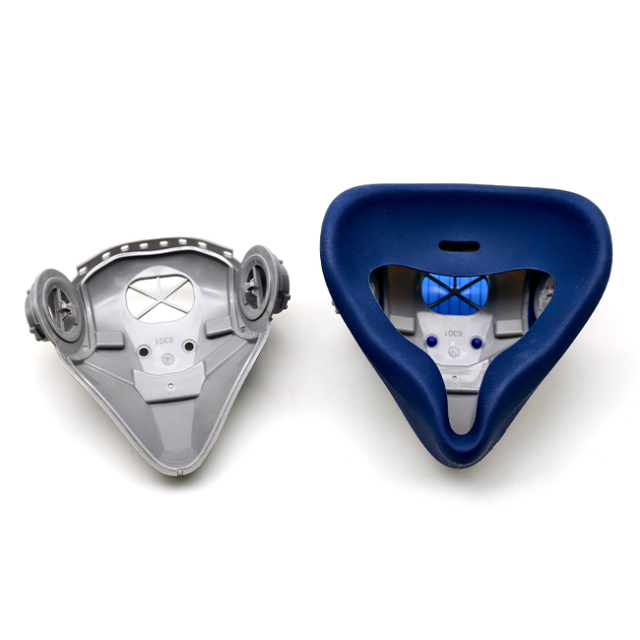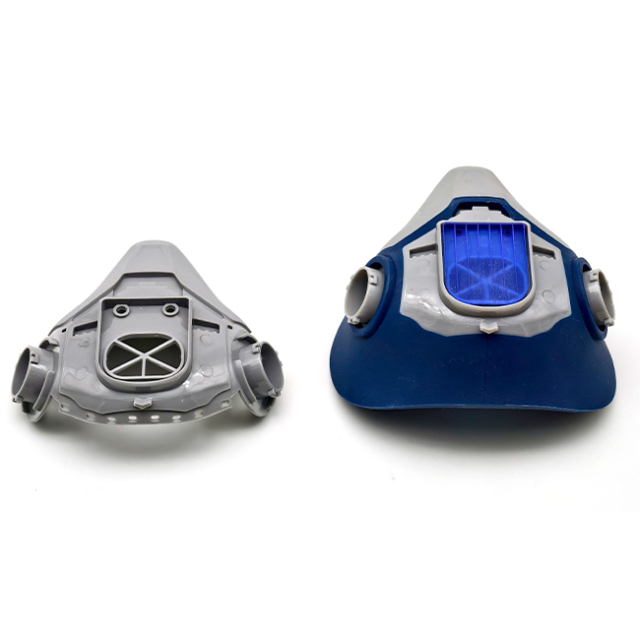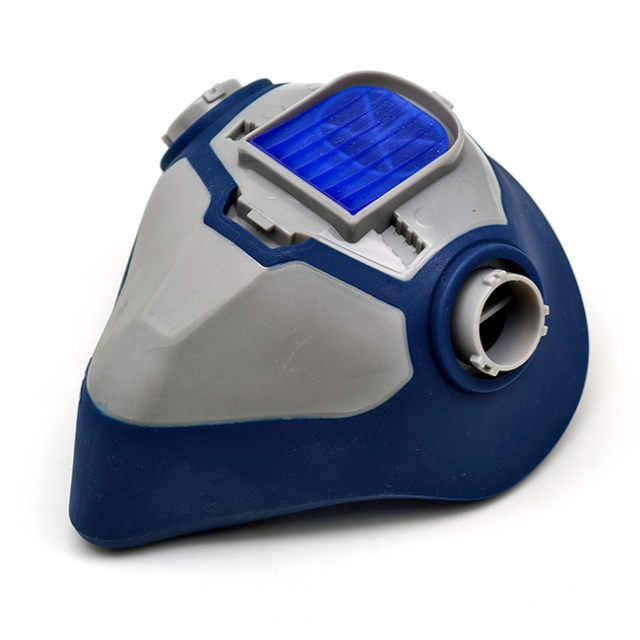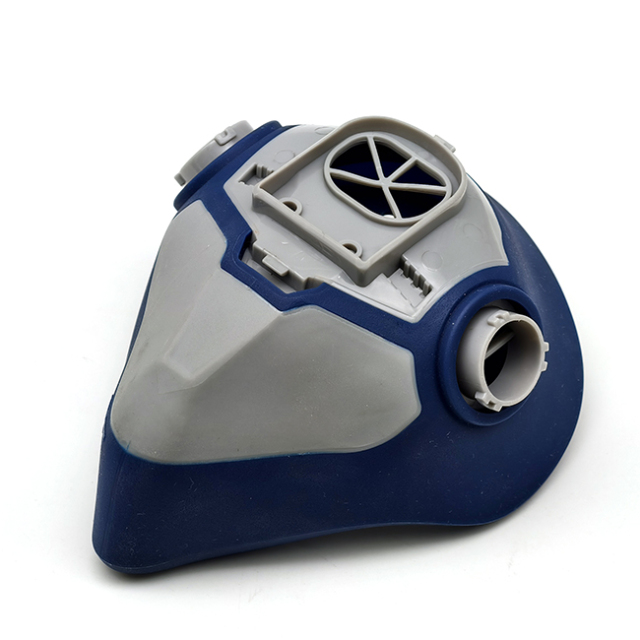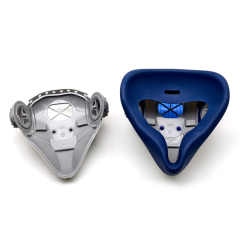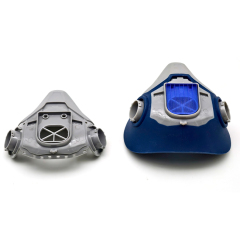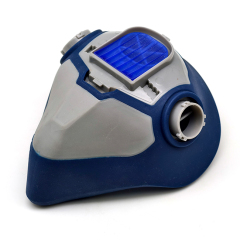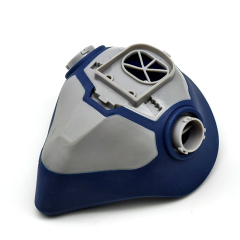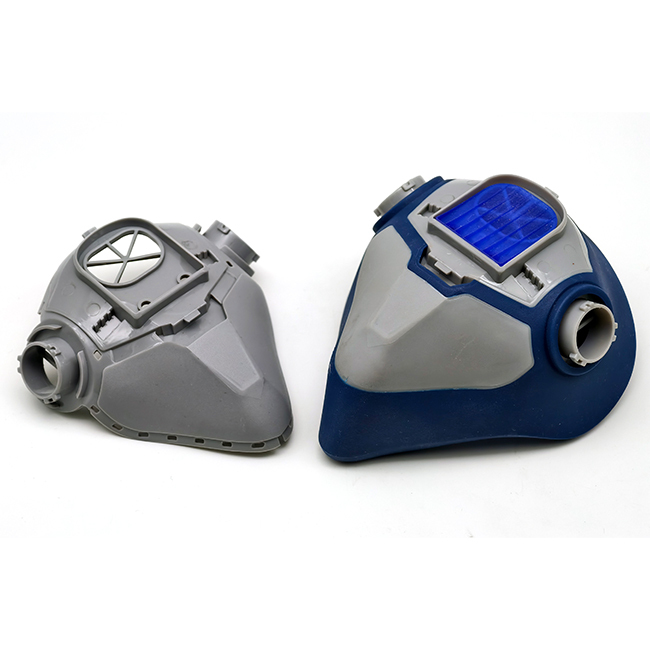
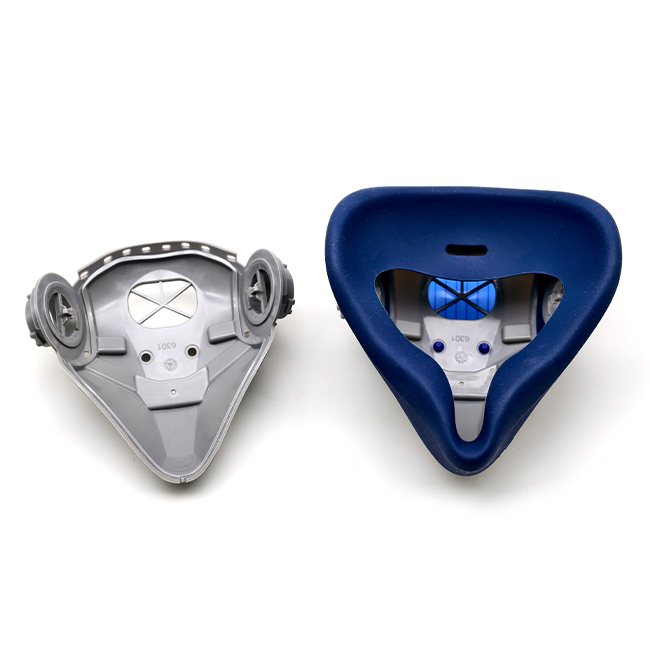
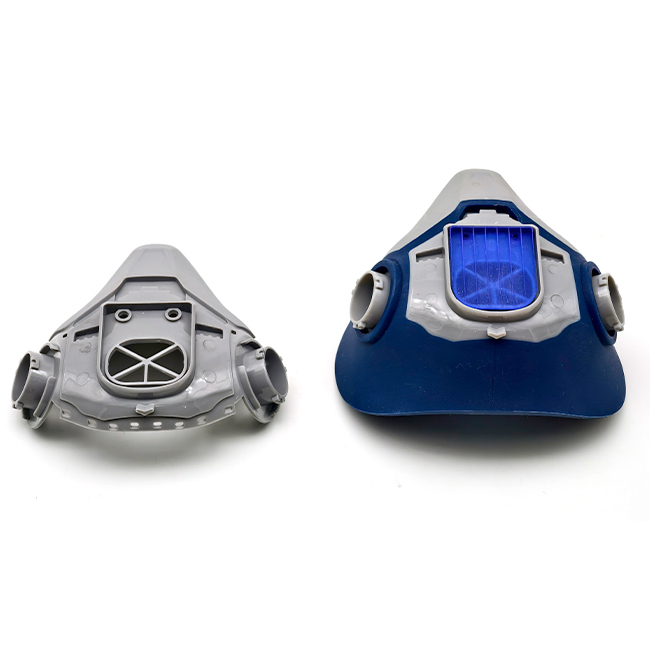
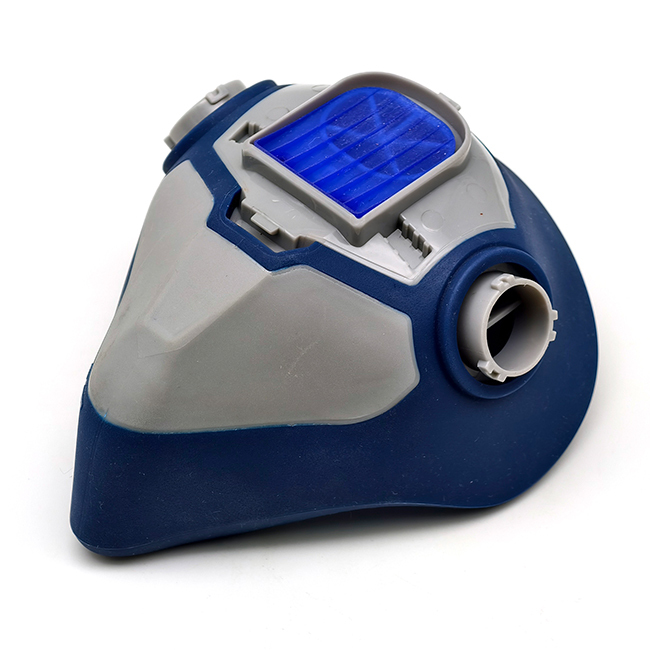
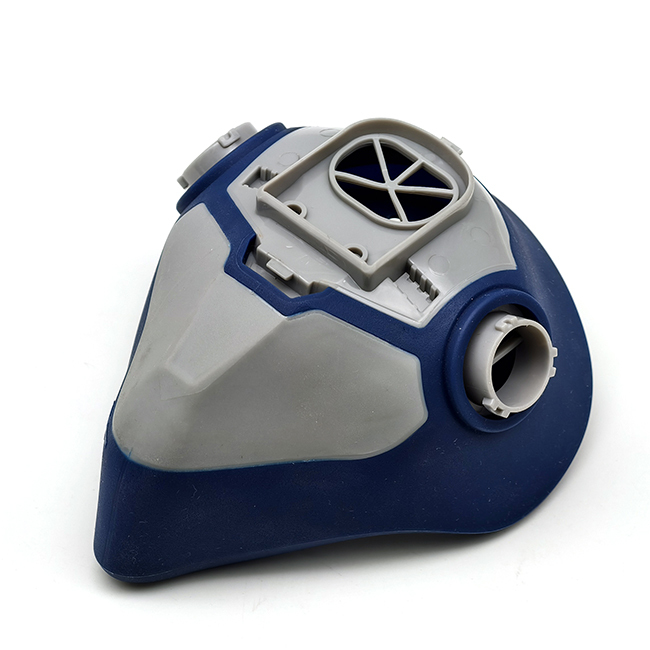
The mask body combines a rigid plastic frame, which carries the filter ports, exhalation valve seat and strap connections, with a soft silicone skin molded directly onto it. The silicone forms the face-contact area and the sealing surfaces around ports. Because the two materials are bonded in molding, there is no separate gasket or glued-on seal to shift, peel or leak at the joint.
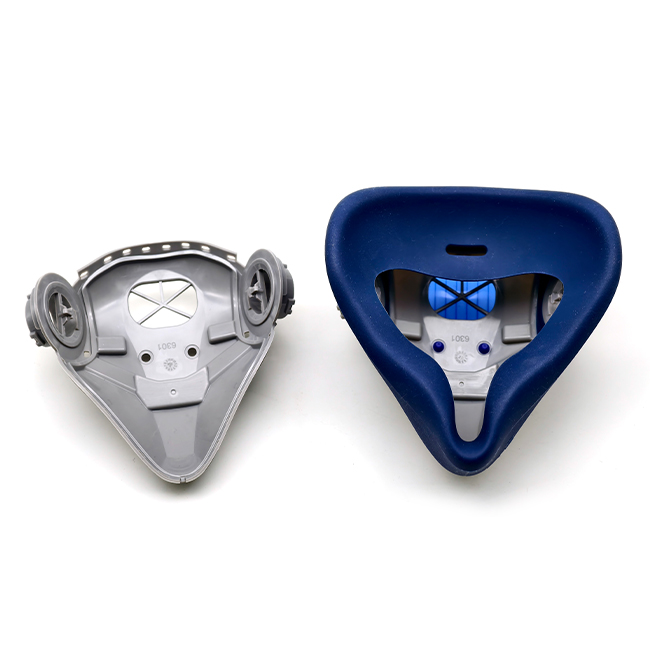
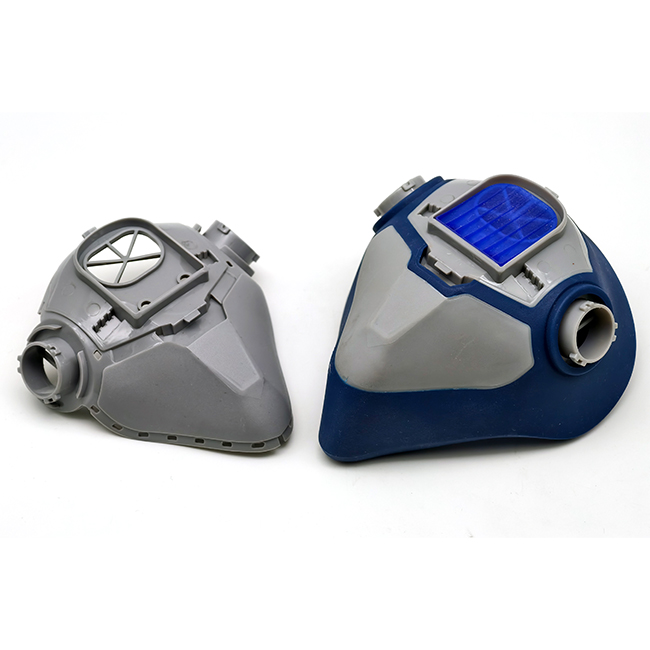
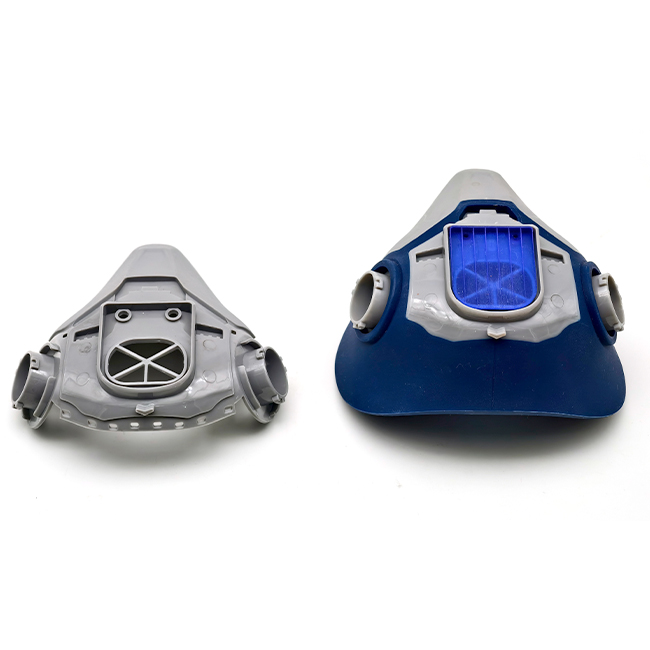
A respirator is only as good as its seal, and it has to be comfortable enough to be worn for a full shift. Silicone is soft and smooth against the skin, does not harden with wear and recovers its shape after repeated use. The face-contact profile is molded to your design so that thickness and edge geometry stay consistent from part to part, which helps keep fit and comfort uniform across a production run.
Workers wipe, wash and disinfect their masks, and use them around dust, solvents, heat and sweat. Silicone resists ageing, moisture and many cleaning agents, and it does not take on odors easily. Your own chemical and cleaning requirements decide the final material choice, and we review these with you at the start.
The weak point of an overmolded mask is the bond line. We match self-adhesive LSR grades to the frame material, commonly PP or PA, and design the bonding areas so the silicone stays attached through repeated flexing, cleaning and strap tension. Bond strength and durability checks can be run to your own specification.
Two-tone and multi-color combinations, such as a blue silicone skin over a grey frame, give your product a clear look and help users tell sizes, filter types or product lines apart. Silicone colors can be matched to your brand color reference.
Edges that touch the face must be smooth, and filter and valve seats must fit exactly. Our tooling uses valve-gate (needle valve) cold-runner injection, which gives gate-free, flash-free silicone sections and reduces manual trimming. Port and valve-seat dimensions can be inspected to your drawing and inspection plan.
Send us your concept or drawings and our engineers will review the design for moldability before any tooling is cut, including silicone thickness, bonding areas, parting lines and valve and port features. We build the molds in-house, so sample changes are made by the same team that runs production, and you get one point of contact from tooling through mass production.