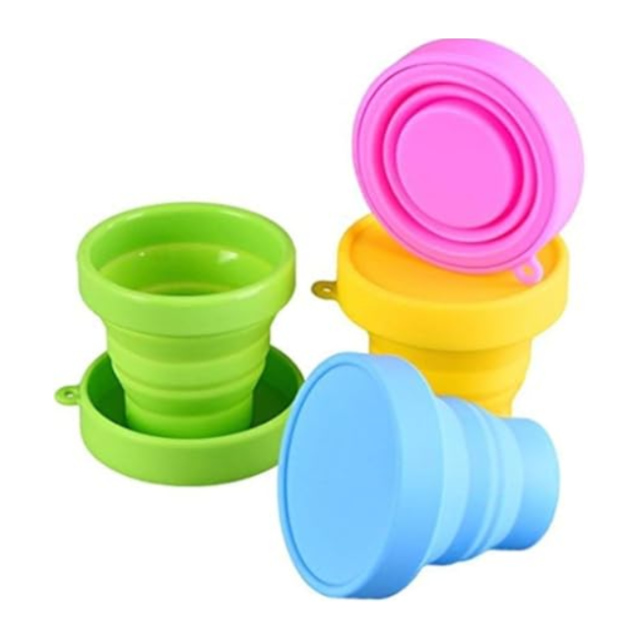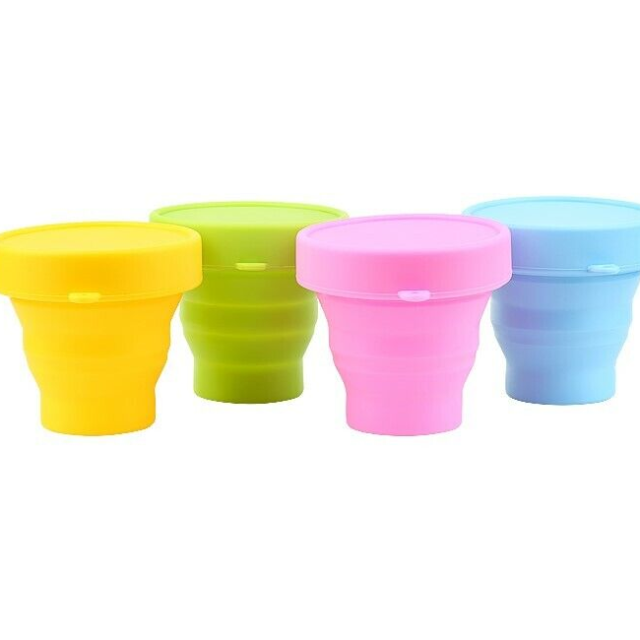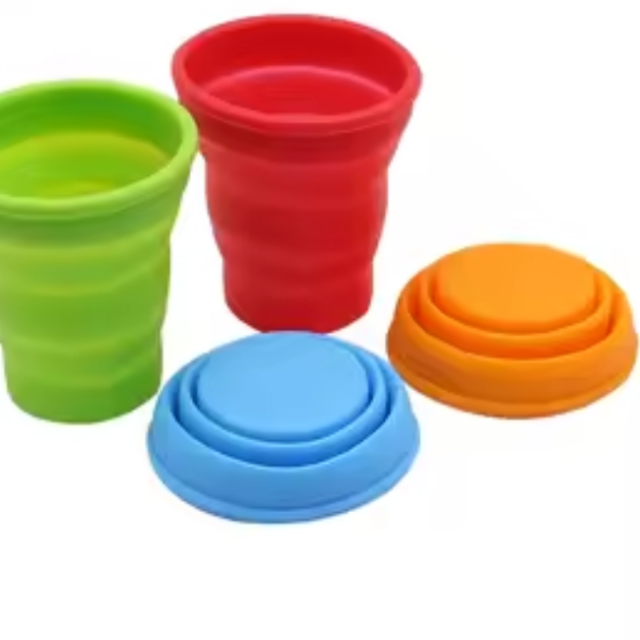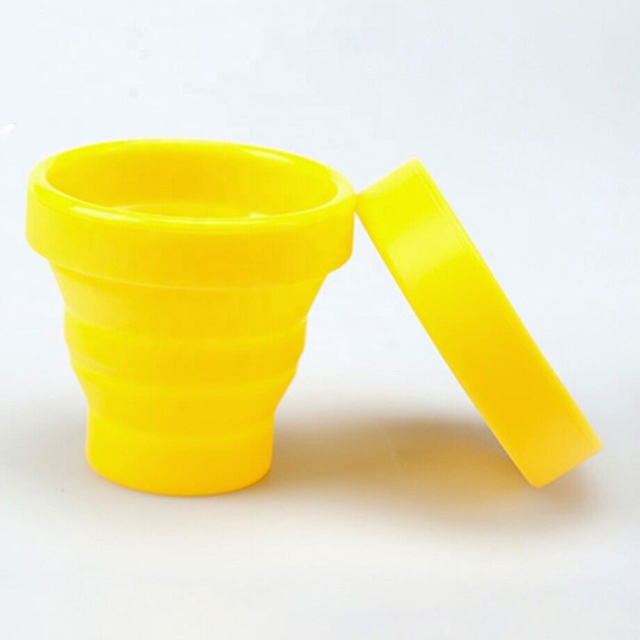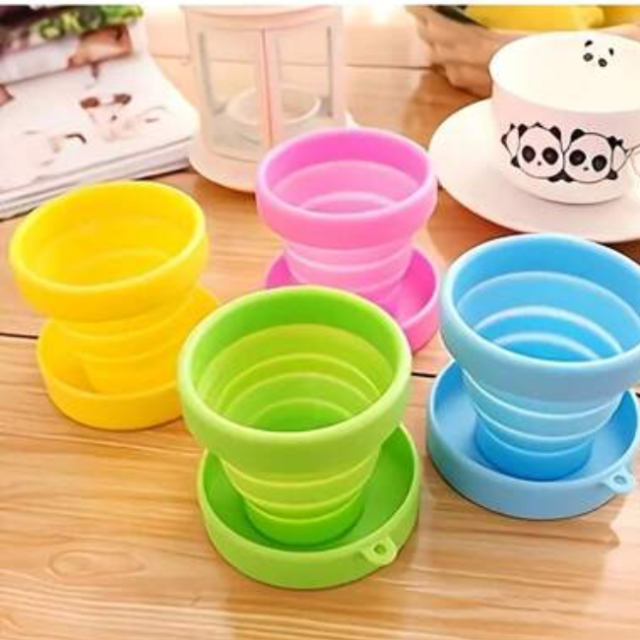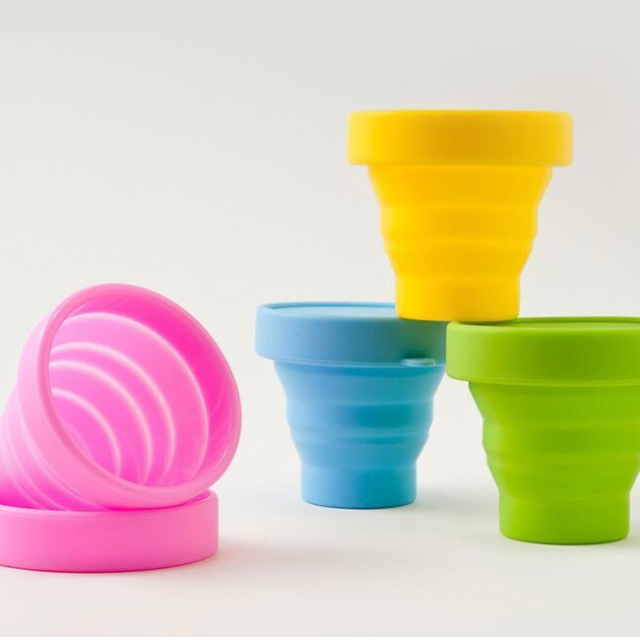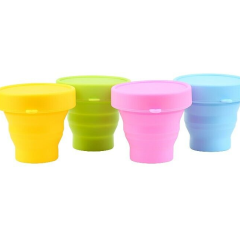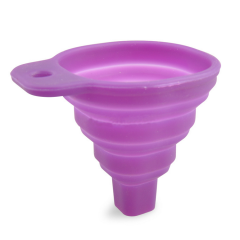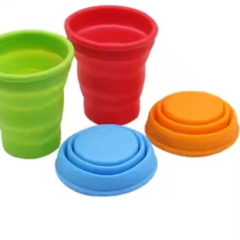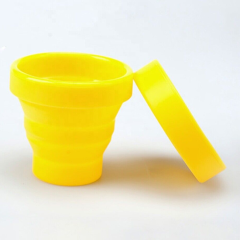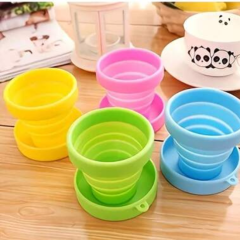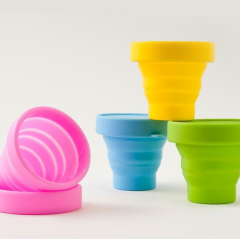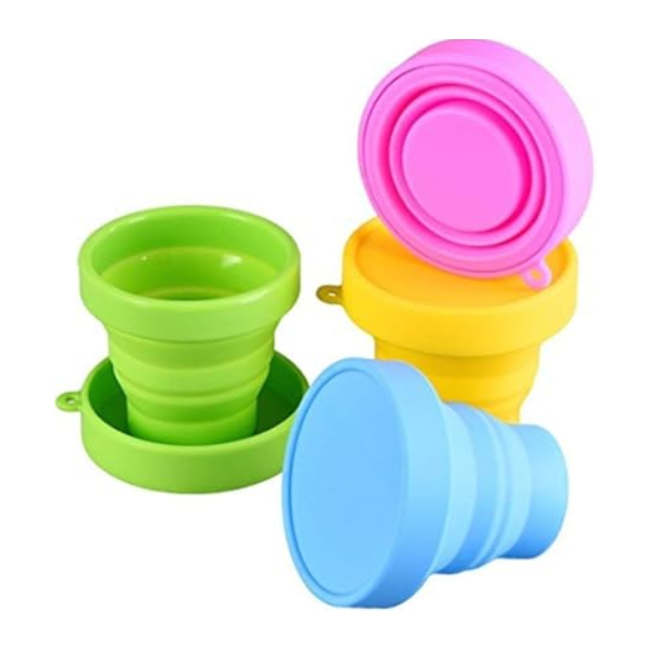
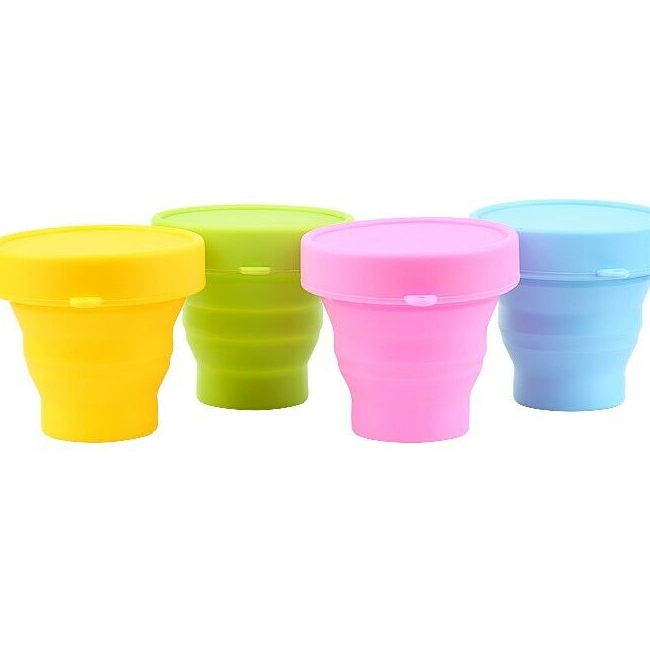
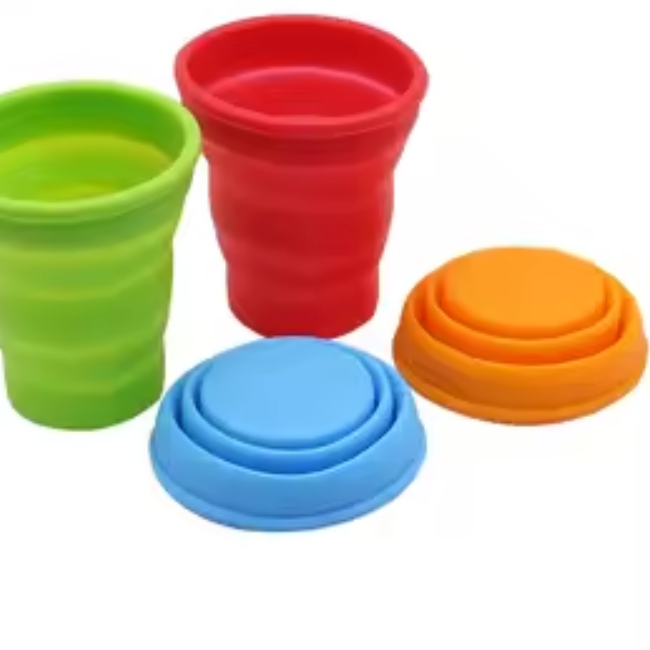
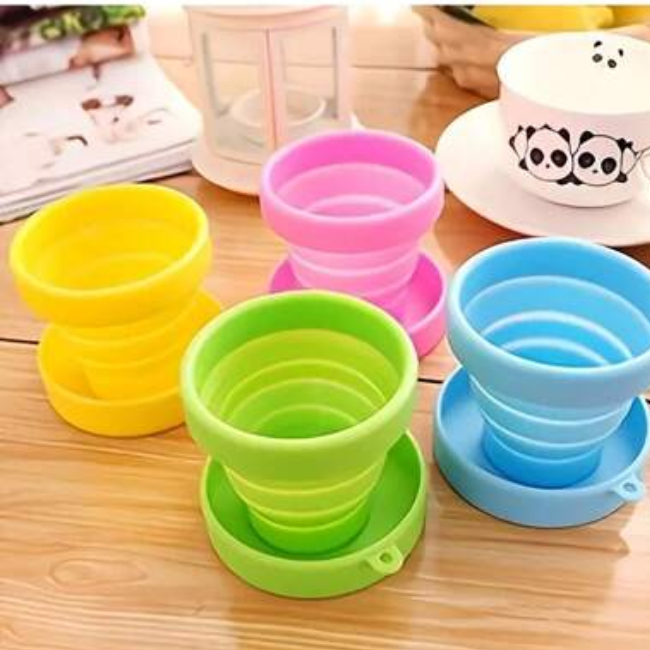
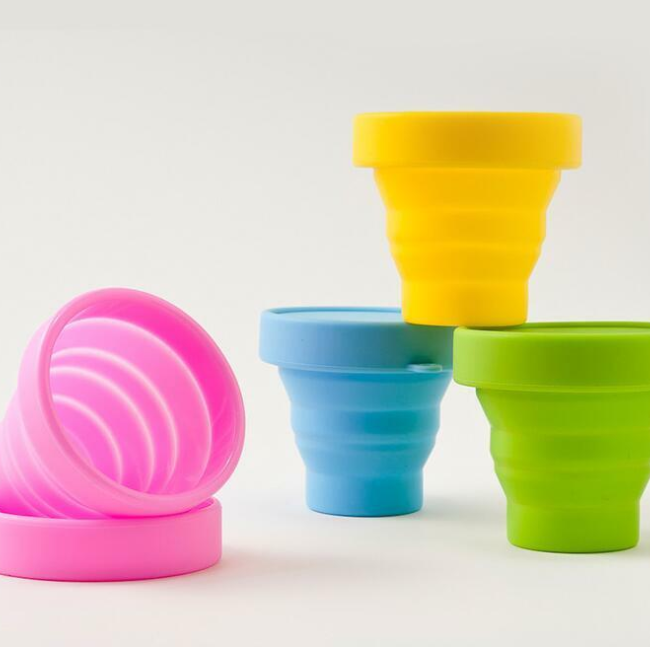
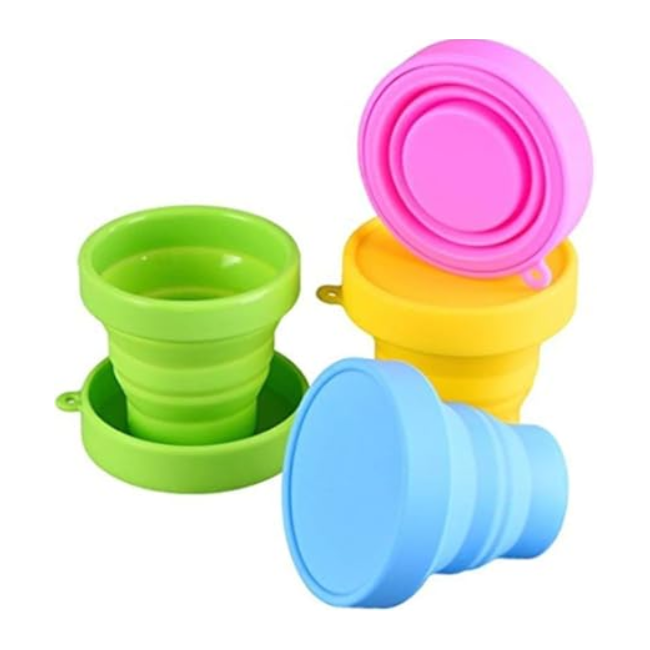
A collapsible cup earns its place by being easy to carry and easy to use. When folded, it presses down to a flat disc. When opened, the pleated wall pulls back into shape and stands on its own. We mold these cups in liquid silicone so the pleats keep springing back after thousands of folds, and the surface stays smooth, clean and free of taste or odor.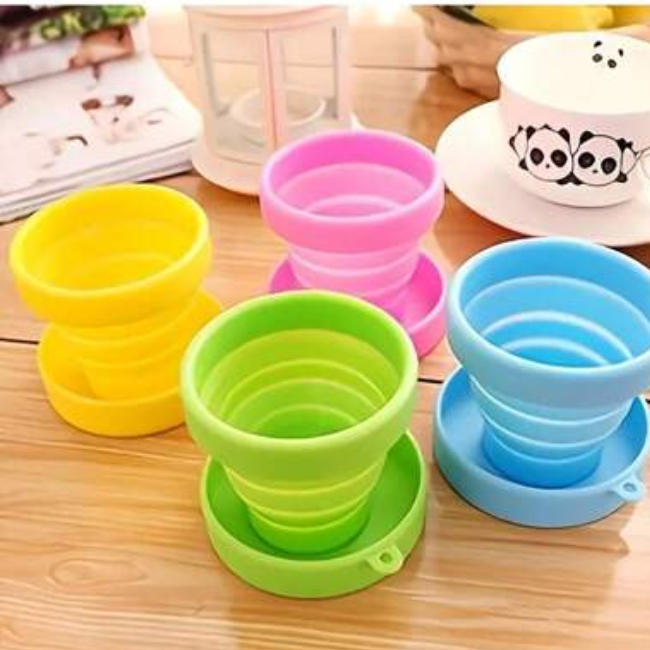
Brands usually bring us this cup for one of four jobs: a giveaway or branded merchandise item, a travel and camping accessory, a kit item for personal care or hygiene sets, or a small measuring and rinse cup that ships inside another product. The same basic form serves all four. What changes is the size, the color and how the lid works.
The decisions that shape the design
Pleat layout. The number and depth of folds set how flat the cup collapses and how firmly it stands open. Deeper pleats fold smaller; shallower ones feel more like a rigid cup. We tune this with you from a sample or a sketch.
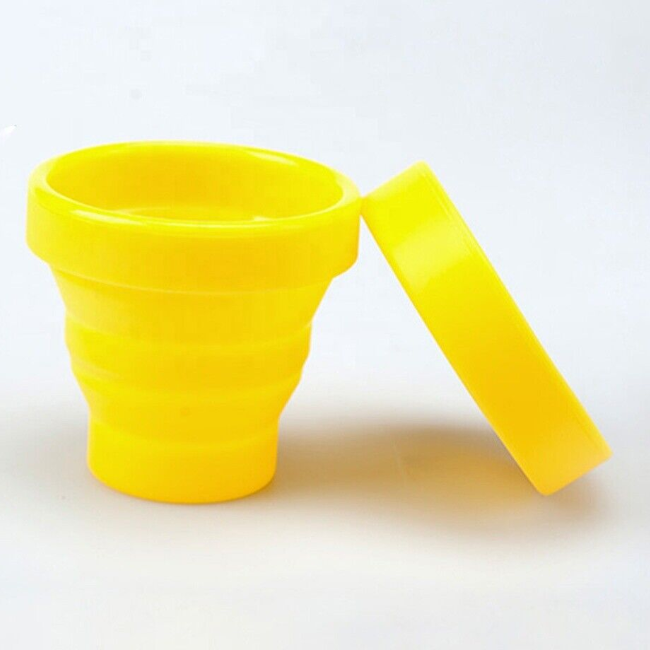
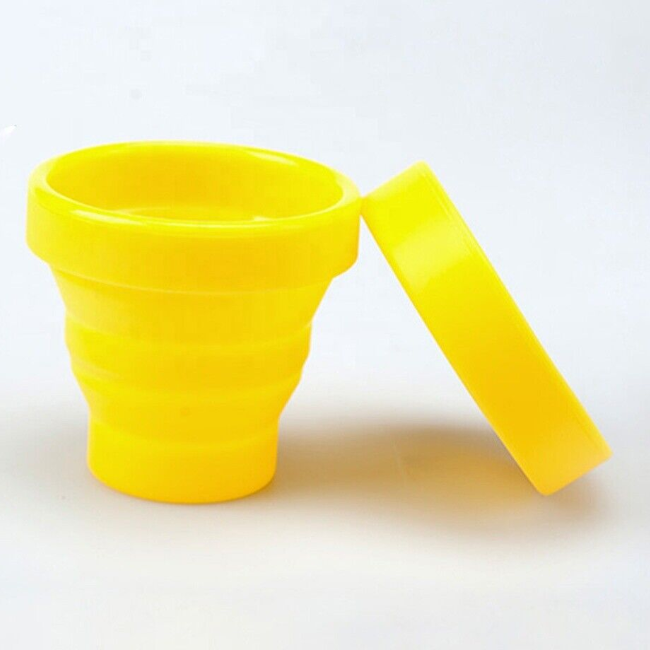
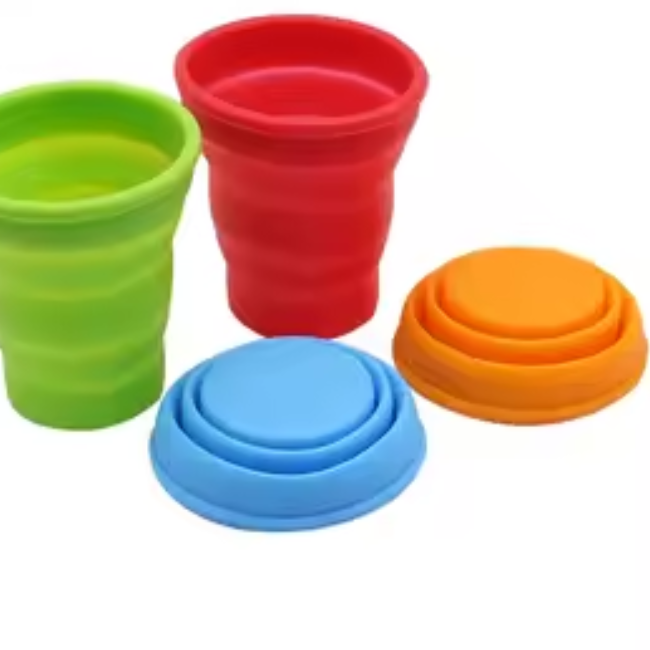
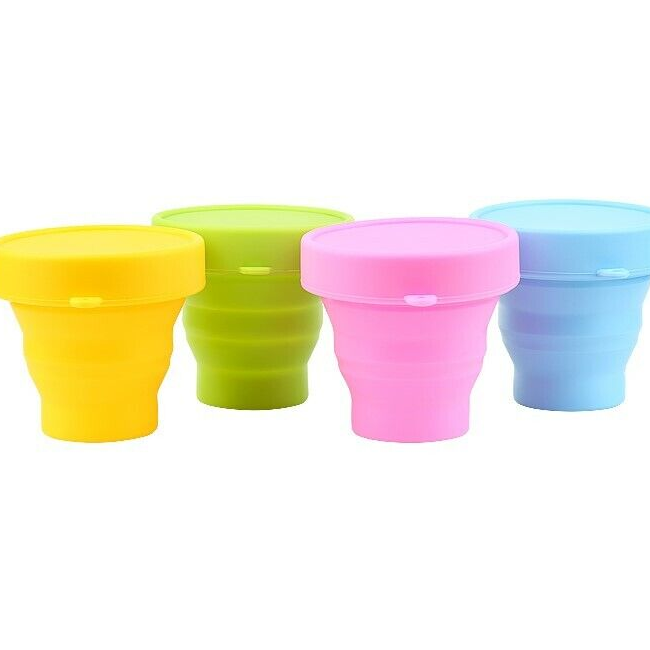
Lid style. Some projects use a flat lid with a small pull tab, others a pleated lid that folds together with the cup. A tab makes the lid easy to remove with one hand, and a folding lid keeps the whole set compact.
Rim and base. A slightly thickened rim feels better on the lips and keeps the opening round. A wider base keeps the cup stable when it is open and standing on a table or the ground.
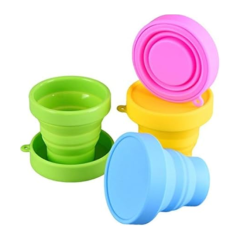
Color and branding. Solid, bright colors are the usual choice, and we match them to a Pantone reference. Logos, size marks and patterns can be molded in or finished as a debossed detail.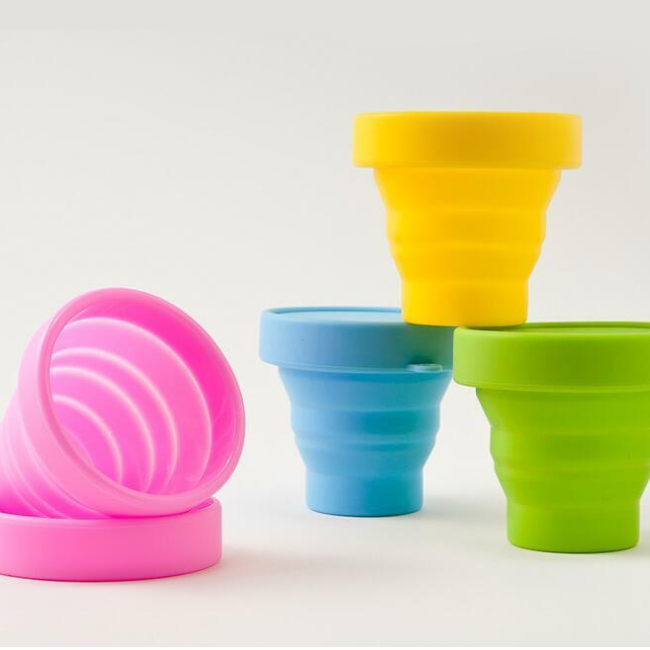
Material and cleanliness
The cup is made from food-grade liquid silicone. It is non-porous and resists stains, tolerates hot and cold drinks, and can be washed by hand or in a dishwasher. We can supply material compliance documents for food-contact markets, and we run production in a clean environment with batch records.
Quality in repeat production
A folding product shows its flaws quickly: a wall that is thin in one spot, a pleat that cracks, or a lid that does not fit. We check wall thickness, lid fit and appearance on first samples, then keep checking during production. Parting lines and gate marks are kept away from the rim and the inner surface, where the user's mouth touches.
Send us a sample cup, a drawing or just a reference photo, along with the size, color and branding you need. We will advise on the pleat structure and lid, then confirm the design before the mold is made.