
Thin walls, deep cavities, and intricate undercuts pose filling and ejection challenges due to LSR's low viscosity and high thermal expansion. Air entrapment becomes more likely in complex geometries. Shrinkage variations can cause warpage or dimensional instability. Successful molding requires advanced mold design, precise process control, and sometimes specialized tooling mechanisms like collapsible cores.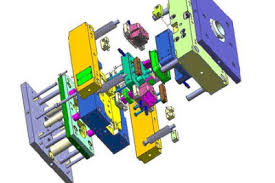
Gate location and size are optimized through simulation to ensure balanced filling. Multiple gates may be used for large or intricate parts. Runner systems are designed to minimize pressure loss and material waste. Strategic venting prevents gas trapping. Mold temperature control is adjusted locally to manage cure rates in different section thicknesses, ensuring uniform properties throughout the part.
Multi-stage injection profiles start with high speed to fill quickly, then switch to low pressure to avoid flashing. Holding pressure compensates for LSR shrinkage during curing. Temperature ramping schedules match the part's thermal mass. Real-time monitoring detects fill patterns and adjusts parameters dynamically. These adjustments are critical for achieving defect-free results in challenging geometries.
Medical device manufacturers produce catheters, implantable sensors, and diagnostic components with complex internal channels. Aerospace applications include fuel system seals and avionics enclosures with tight space constraints. Consumer goods feature multi-material assemblies for enhanced functionality. These industries push the boundaries of what's possible with LSR molding technology.

