
Mold for silicone menstrual cups specifications
| Mold details | 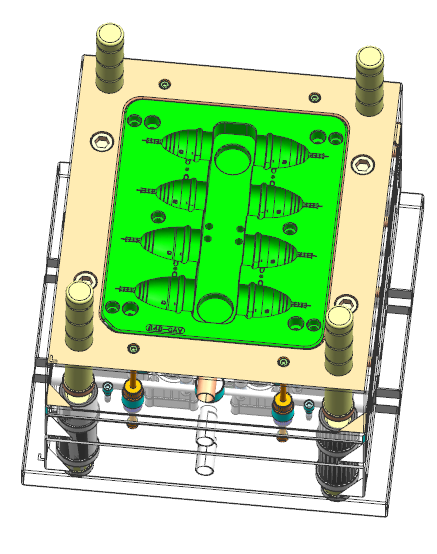 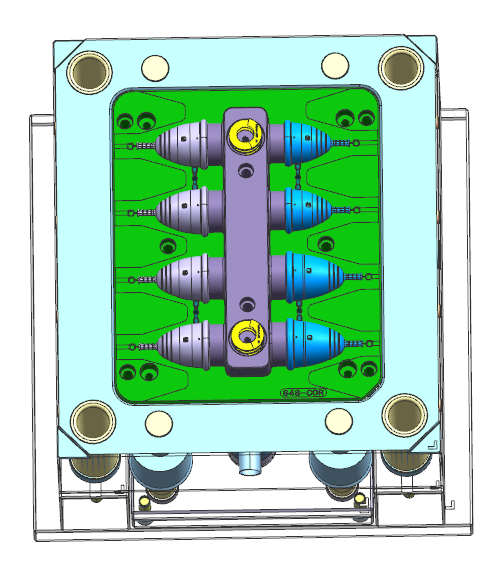 |
|
| Mold base material | P20 (customizable) | |
| Mold core/insert material | S136 (customizable) | |
| Cavity | 8 cavities (customizable) | |
| Runner | Cold runner | |
| Nozzle | 8 pcs needle valve injection nozzle | |
| Demolding | Demold automatically by blowing air |
130T Vertical LSR injection molding machine TYM-W5050 Specifications
| Clamping Unit |  |
|
| Clamping force | 130T | |
| Opening stroke | 200-700m | |
| Tie-Bars space | 500*500mm | |
| Ejection force | 4T | |
| Ejection stroke | 150mm | |
| Others | ||
| Motor power | 12kw | |
| Voltage & current | 380V,50hz | |
| Pump Pressure | 20mpa | |
| Time schedule controller (TCON) | 8 sets | |
| Machine Weight | 5.8T | |
| Machine dimension | 4.3*1.4*2.0m |
FAQ
Q1: What types of silicone are used in your silicone menstrual cups?
A: We use medical-grade, platinum-cured LSR certified by FDA and ISO standards. This material ensures excellent flexibility, chemical resistance, and biocompatibility, making it safe for prolonged vaginal contact.
Q2: Can you provide custom packaging or private labeling?
A: Yes, we offer OEM and ODM services, including customized packaging, logo printing, and color selection. We support both bulk and individual retail packaging solutions based on your market requirements.
Q3: Are your menstrual cups compatible with sterilization methods?
A: Absolutely. Our silicone menstrual cups are compatible with autoclave sterilization, as well as other common methods such as boiling water or UV sterilization. The material retains its shape and properties even after repeated sterilization cycles.
