
Effective mold venting is a silent but crucial factor in achieving fast, high-quality injection molding cycles. During the filling phase, air and volatile gases trapped inside the mold cavity must escape. If venting is inadequate, this trapped gas is compressed, increasing pressure and temperature. This can lead to several problems: the compressed gas can cause burn marks or discoloration on the part's surface, a phenomenon known as gas burning. More subtly, it creates backpressure that resists the incoming molten material, effectively slowing down the filling process and increasing cycle time.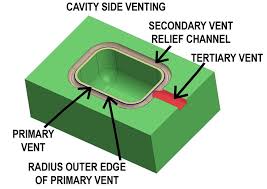
The location and design of vents are critical. Vents must be strategically placed at the end of the flow path, where air is most likely to become trapped, such as at the extremities of ribs, bosses, or deep cavities. The depth and width of the vent slots must be carefully calculated. They need to be deep enough to allow air to escape freely but shallow enough to prevent molten material from flowing into and blocking the vent, which would cause a short shot. For most materials, vent depths are measured in thousandths of an inch.
Material type significantly influences venting requirements. Materials that decompose easily or release more volatiles during processing, such as PVC or some engineering resins, require more generous venting. Crystalline materials, which shrink more upon cooling, can pull a vacuum that makes venting even more critical. In LSR molding, where precise stoichiometry is vital, any trapped air or moisture can interfere with the curing reaction, potentially leading to incomplete curing or physical property variations, necessitating careful venting design.
Modern approaches to venting go beyond simple slots. Vacuum vents can actively remove air, virtually eliminating burn risks and allowing for faster filling. Porous steel inserts provide distributed micro-venting across large surface areas. These advanced techniques, while more expensive, can be justified in applications demanding the highest quality or fastest possible cycles. Regular maintenance, including cleaning vents to prevent blockage by residue or wear debris, is essential to ensure they continue to function effectively and do not become a hidden bottleneck to production speed.

