
In precision mold manufacturing, micro machining technology and surface treatment processes have become decisive factors influencing final product quality, mold durability, and manufacturing consistency. As industries continue moving toward miniaturization and higher precision standards, especially in medical, electronics, and liquid silicone rubber applications, traditional machining methods alone are no longer sufficient to meet modern production requirements.
Modern molds increasingly require micron-level dimensional accuracy and highly controlled surface structures. Even extremely small deviations in cavity geometry can directly affect product appearance, sealing performance, and dimensional consistency. Micro machining technologies such as high-speed CNC milling, EDM finishing, and ultra-precision grinding allow manufacturers to achieve tighter tolerances while maintaining complex cavity geometries.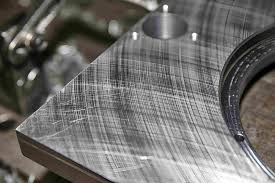
The mold surface directly affects friction characteristics during demolding. Highly polished surfaces may improve optical clarity for transparent silicone products, while controlled texturing can reduce adhesion and improve release performance for elastomeric materials.
Surface treatments such as nitriding, PVD coating, and hard chrome plating improve wear resistance under long-term production conditions. These treatments help reduce cavity degradation caused by repeated injection cycles and abrasive filler materials.
Certain silicone additives and cleaning chemicals may gradually affect untreated steel surfaces. Advanced surface coatings improve corrosion resistance and maintain cavity stability during extended manufacturing operations.
In high-precision manufacturing environments, mold quality directly determines product repeatability. Uniform cavity surfaces help stabilize material flow behavior and reduce dimensional variation between production cycles. This becomes particularly important in multi-cavity molds where slight machining differences can lead to inconsistent shrinkage and curing performance.
The future of mold manufacturing is increasingly connected with digital machining simulation, ultra-precision metrology, and intelligent surface engineering. AI-assisted machining optimization and automated polishing technologies are helping manufacturers achieve greater consistency while reducing manual finishing variability.
A:It improves wear resistance, corrosion resistance, and demolding performance.
A:High-speed CNC machining, EDM, ultra-precision grinding, and laser machining are widely used.
A:Yes. Surface texture influences adhesion, appearance, and release behavior.

